Te Arikitanga Ō Taitokerau
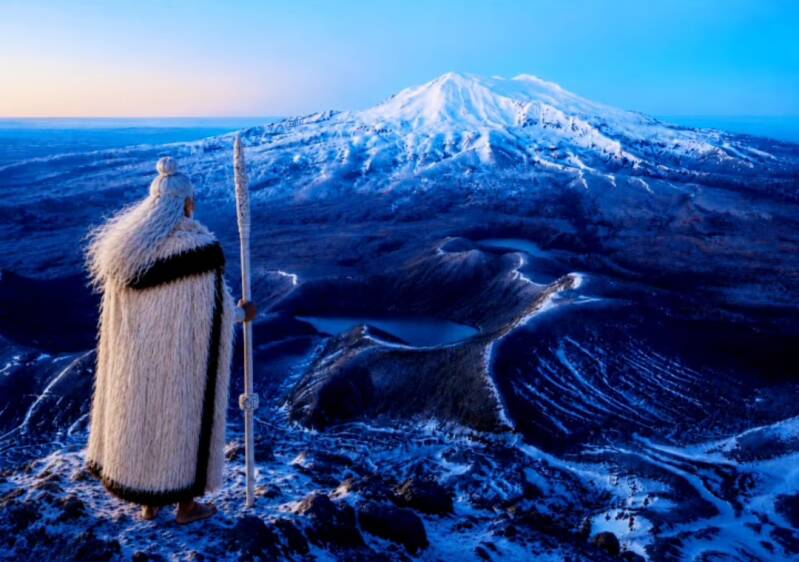
Te Kāhui Maunga
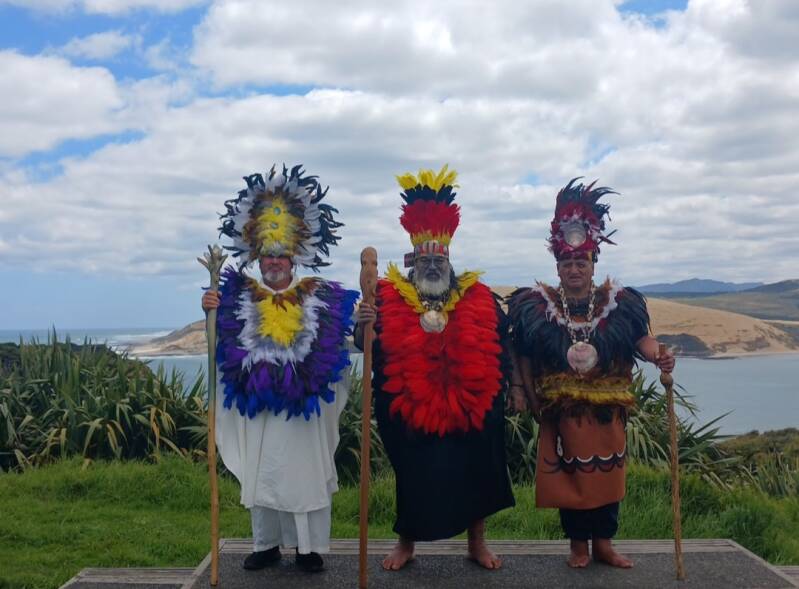
Te Hokianga Nui Ō Kupe
The restoration of Kōpū Ariki (Arikitanga) within Taitokerau is one of the most important discussions facing our people today.
Due to the severity of colonisation throughout Taitokerau, many of our ancient systems of knowledge were dismantled.
They are making are come back.
The old IO Whare Wānanga gradually died out, with the last recognised Whare Wānanga closing in 1958 under the authority of the scribe Takou Himiona Kāmira.
Because of this loss, many whānau and hapū within Taitokerau and Ngāpuhi no longer believe that Kōpū Ariki (Arikitanga) ever existed here.
Yet this is not true.
Kōpū Ariki (Arikitanga) was once a deeply embedded part of our tribal infrastructure and social order, existing for millennia throughout Hawaiki and across Te Moana Nui a Hīva.
According to our traditions and oral histories, Kupe-Ariki was commissioned by IO to bring the teachings and sacred knowledge of IO into Hokianga over 1,200 years ago.
He carried knowledge systems, ceremonial understandings, whakapapa traditions, navigation sciences, and sacred forms of leadership connected to Kōpū Ariki (Arikitanga) and the higher teachings of IO.
For generations these teachings survived within selected whakapapa lines, IO Tohunga traditions, and Whare Wānanga throughout Taitokerau.
However, through colonisation, land loss, suppression of language, religious conversion, and the dismantling of traditional institutions, much of this knowledge became fragmented or hidden from public view.
Today many people no longer realise that the foundations of IO traditions, celestial navigation, and Kōpū Ariki (Arikitanga) were once deeply interwoven within the living life of Taitokerau itself.
This understanding became one of the driving forces behind a thirty-year pilgrimage I made throughout Hawaiki, particularly to Hawai‘i, Rapanui, Rarotonga, and Ra‘iātea.
Through whakapapa, oral histories, and the knowledge held by our relations across Te Moana Nui a Kiwa, it became clear that Kupe-Ariki descended from the Tamatoa Ariki bloodlines.
I also believe the influence of the churches throughout Taitokerau significantly altered our cultural lens and changed the way many of our people see themselves.
Today throughout Ngāpuhi and Taitokerau, it is common to hear people say,
“God is the only true Ariki of all Ariki.”
Yet Arikitanga existed long before colonisation and Christianity arrived upon our shores.
Kupe-Ariki was here a thousand years before any outside religion arrived.
In recent times, Te Moana Nui a Hīva witnessed one of its most significant gatherings in modern history.
Hōkūleʻa celebrated fifty years since the rebirth of celestial navigation, while Te Aurere under the leadership of Hekenukumai Pūhipi had previously completed the sacred work of lifting the tapu from Te Ava Mo‘a alongside Tohunga Te Ao Pehikara in 1996.
However, another task still remained — the reopening of the Rangitūhaha.
I first became aware of this through Pierre Samkua Kouia of Ra‘iātea 27 years ago.
In 2018, Haami Piripi and I asked Uncle Hector to consider taking up the Arikitanga of Taitokerau so that Te Aurere could return to Ra‘iātea carrying the Arikitanga and ceremonially reopen the Rangitūhaha.
However, Uncle Hector declined after members of his hapū Te Uri O Hina and Te Rarawa asked him not to.
He passed away in 2019.
In 2025, Te Moana Nui a Hīva gathered again at Marae Taputapuātea.
I believed for Taitokerau to have a recognised voice at that table, someone needed to carry Te Arikitanga Ō Taitokerau, Te Mana Ō Kupe into this gathering.
Today many people use titles such as Ariki and Arikinui loosely.
Yet traditionally, Arikitanga required sacred preparation, tikanga, discipline, whakapapa, and ceremonial confirmation through the Tohi Ariki.
In my understanding, one cannot simultaneously carry titles such as “Sir” or “Doctor” while holding the Arikitanga of IO, because they arise from different systems of authority.
Today within Taitokerau, whether people wish to acknowledge it or not, I know of only three people who have undertaken the Tohi Ariki process and hold the appropriate bloodlines.
The mana of the IO-Arikitanga must be spiritually bestowed through IO and through the unbroken ancestral Tātai Arorangi of Kupe-Ariki.
Without that confirmation, there can be no true Arikitanga.
The three people who carry the true IO-Arikitanga today do not base their standing upon public opinion, politics, popularity, or institutional approval.
The deeper issue remains this: colonisation disrupted our traditional structures so severely that many of our people no longer recognise that Arikitanga ever existed within Taitokerau or have abandoned IO entirely.
Yet throughout Te Moana Nui a Hīva, evidence of Arikitanga still survives through whakapapa, navigation traditions, sacred ceremony, and ancestral memory.
The restoration of these understandings is not simply about titles; it is about restoring identity, continuity, and the spiritual infrastructure of our people.
In 2025, a humble group of ten of us from Aotea Roa completed the mission of reopening the Rangitūhaha for all our whānau and completed what Uncle Hector and Te Aurere started in 1996.
Thirty-one years earlier, Uncle Hector and Te Aurere had lifted the tapu at Te Ava Mo‘a.
What remained unfinished was brought to completion through the kaupapa known as Te Kakenga ki Ngā Rangitūhaha: The Ascension to the 13 Dimensions of IO.
PWO navigators Nainoa, Hek, Piripi, Jack, Stanley, and others navigated the deep sea through star navigation.
Our humble ten navigated what I describe as the Multi-Dimensional IO-Verse and the 13 dimensions of Rangitūhaha — effectively navigating the ocean of infinite time and infinite space.
Another level of celestial navigation.
This mission did not belong to one person alone.
It begins with IO and with Kupe-Ariki and was carried through generations by those who protected the knowledge and continued the journey, all the way to Te Wānanga Ō Taitokerau.
It belongs to the 750 Atua and tūpuna named within the Tātai Arorangi, celestial and terrestrial geneology.
In 2025, that journey reached another milestone as the Rangitūhaha was reopened by an ordinary yet committed group of people, Ngā Manuariki O Te Nukuroa O Te Moana Nui, carrying an extraordinary responsibility.
Kupe-Ariki 's kōiwi hold the mauri of IO in place and were returned to Aotearoa to realign IO-Arikitanga again.