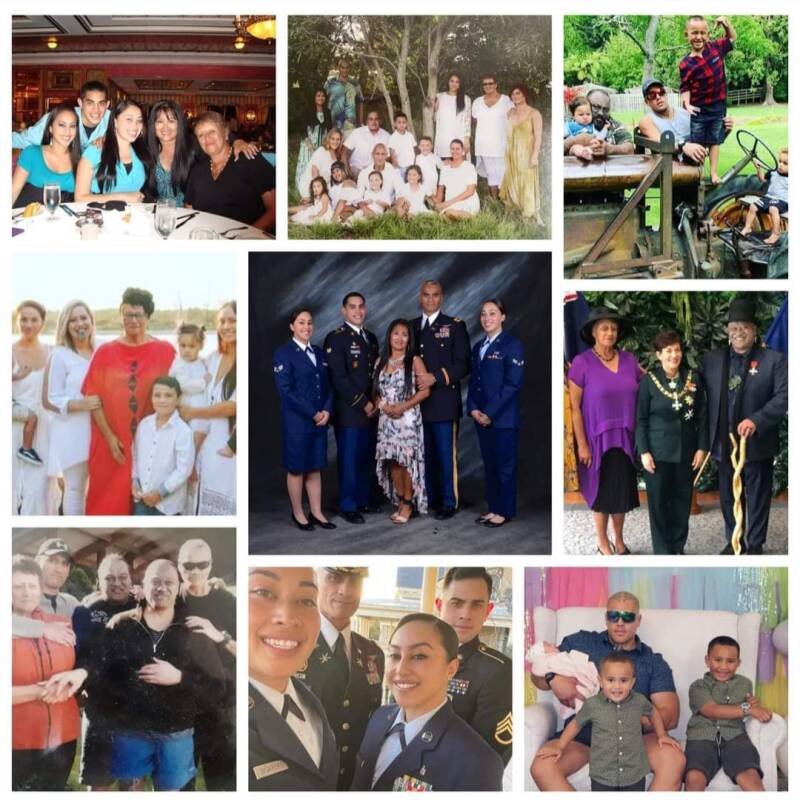
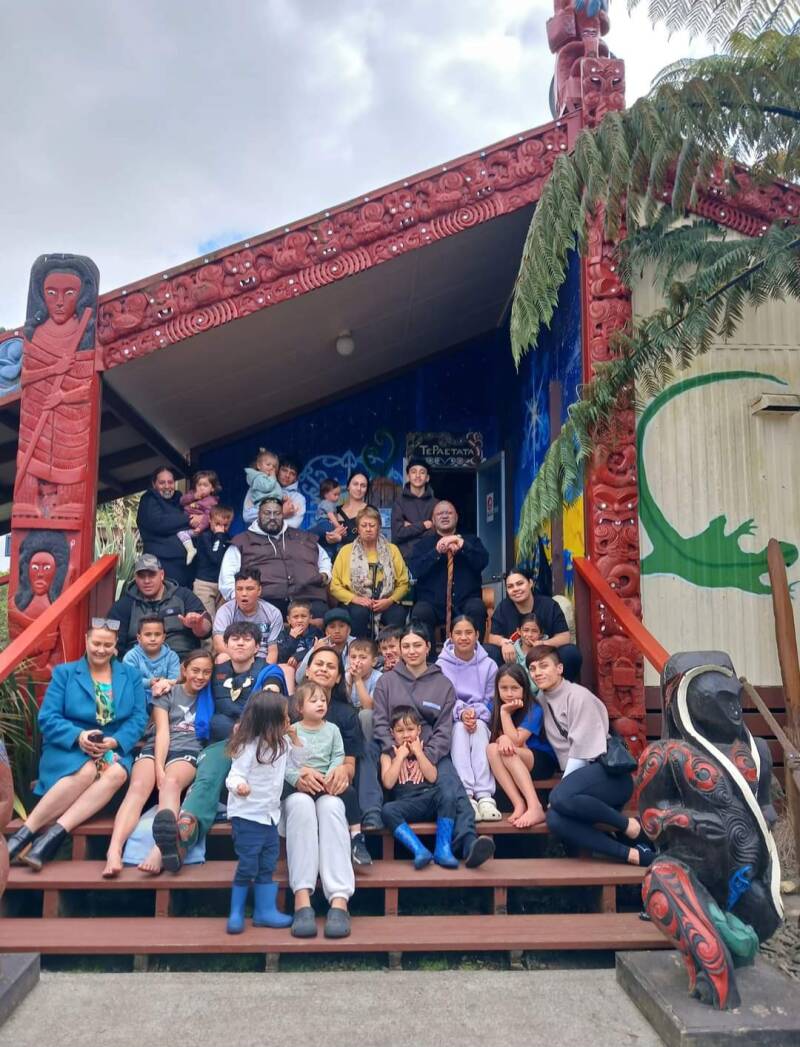
Te Tokoono Ō Tāwio me Amohaere
Monday 28th September, 2026
INTRODUCTION — THE SIX BROTHERS AND THE CONTINUUM OF THEIR NAMES
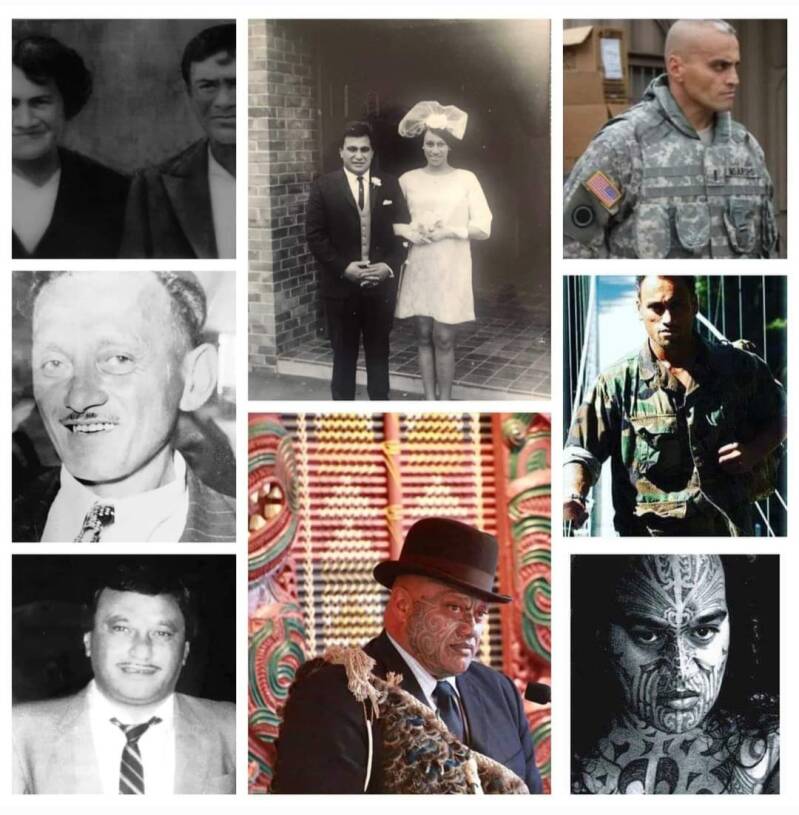
The names and roles of the six sons of Samuel Tāwio Ngaropo 2nd and Judith Amohaere Tangitū form a continuous whakapapa of birth order, tūpuna, wānanga, responsibility, spiritual protection, and legacy. The two tuākana, Hone Ngaropo and Sam Ngaropo 3rd, remain permanently within the whakapapa as the first and second-born sons. Their premature deaths through mākutu are part of the whānau kōrero and are understood as connected to the significant work and legacy that Hone and Sam 3rd would have completed if they had lived, which the four surviving brothers would go on to carry until Christian passed. Only three brothers survive today.
The six brothers each carried a distinct role within the whānau. Hone Ngaropo carried Te Mauri (the life force), Sam Ngaropo 3rd carried Te Ngākau (the heart), Nicholas Hamilton Ngaropo, later Pouroto, carried Te Pūkōrero (Orator, Statesman), Samuel Tāwio Ngaropo 4th carried Te Taha Hinengaro (mind), Christian Matiu Ngaropo carried Te Taha Tinana (physical attributes), and Tamehana Reone Ngaropo carries Te Taha Wairua (spiritual side).
The succession of names carried through the generations was therefore not simply a matter of changing identity. Each name connected the person carrying it to particular tūpuna DNA, whakapapa matrix, whenua alignments, wānanga, relationships, responsibilities and spiritual protection. Names such as Pouroto, Tangaroa, Te Ngakooterangi Rēnata, Te Wharekāponga, Te Whatukura Ō Tangaroa and Kupe Nuku IO-Ariki IX reveal a deeper continuity between the family’s ancestral past and the work being carried forward in the present. At the center of this continuum is Kupe-Ariki. The emergence of Te Whatukura Ō Tangaroa and Kupe Nuku IO-Ariki IX connects the family’s inherited names and spiritual responsibilities to the wider revival of Kupe-Ariki, the return of Kupe, and the reconnection of the eight Houses of Kupe-Ariki across Te Moana Nui ā Hīva.
In this sense, Kupe is not separate from the family’s naming history; it represents a further unfolding of the whakapapa and responsibilities carried through the generations. The names therefore tell a story: birth and whakapapa → the loss of the tuākana → the distinct roles of the surviving brothers → ancestral names and wānanga → spiritual protection → the carrying forward of the family legacy → and ultimately the wider Kupe-Ariki continuum and the realignment of the whānau infrastructure over 800 generations. Please be mindful we are only scratching the surface of the accomplishments of the brothers; their biographies are for another time. Nicholas and Amohaere have both completed their personal biographies written by Bradford Haami. Tamehana will get his biography written also.
Everything has a purpose.
In the immediate whānau, our parents, Samuel Tāwio Ngaropo 2nd and Judith Amohaere Tangitū, had six sons. It’s important to mention Judith during her Māori General Manager’s career at the Starship Hospital also changed her name to use her middle name, Amohaere. She leaves her married name, Ngaropo, and transforms into Amohaere Judith Tangitū. Full circle for her during the 1990s.
THE LATE TE NGAROMATE (KORO) TUTUA — TOHUNGA MATAKITE AND SPIRITUAL SEER OF NGĀTI AWA
The late Te Ngaromate Koro Tūtua was a renowned Māori seer and Tohunga Matakite of Taiwhakaea, Ngāti Awa. He was known throughout Aotearoa for his abilities as a seer and for the spiritual guidance he provided to people and whānau. For more than 40 years, he provided his services throughout the Whakatāne region, often freely, and his name became widely known beyond Ngāti Awa and throughout Aotearoa.
Our whānau knew Koro Tūtua personally from when we were children. We went to see him and received his kōrero, guidance and spiritual understanding for over 30 years. His relationship with our whānau therefore was not something that came later through the writing of this document; it formed part of our lives and our understanding of our whakapapa, our names, our tūpuna and the events that unfolded around our family. Koro Tūtua’s role in this whakapapa is important because he was able to speak to matters that our whānau understood as existing beyond what could normally be seen physically. He provided a spiritual interpretation of the lives of the six brothers, the premature deaths of Hone Ngaropo and Sam Ngaropo 3rd, the responsibilities carried by the surviving brothers, and the particular position of Tamehana as the carrier of Te Taha Wairua. His kōrero also extended to the names carried throughout Tamehana’s life. When questions were asked about whether the tūpuna supported the names Te Ngakooterangi and Rēnata, Koro Tūtua gave his understanding of what the tūpuna were communicating. His kōrero connected the names with whakapapa, tūpuna, wānanga, protection and the journey Tamehana was undertaking.
Koro Tūtua also spoke directly about mākutu and its relationship to the events experienced by our whānau. The examples of mākutu recorded in this document are understandings that Koro Tūtua himself shared directly with Tamehana and the whānau. This includes his understanding of the premature deaths of Hone Ngaropo and Sam Ngaropo 3rd, the later death of Christian, and the loss of Te Pouōterangi Ngaropo. These are not interpretations added later by Tamehana; they form part of the kōrero and spiritual understanding directly given by Koro Tūtua himself. We visited Koro as individuals and as a family together.
For our family, Koro Tūtua was therefore not simply an outside commentator. He was a Tohunga Matakite whom we knew, who knew our grandparents and parents intimately, whose spiritual services were part of the life of our whānau, and whose kōrero became part of how we understood events that otherwise could not be explained through ordinary physical circumstances alone. His kōrero is included in this document because it forms part of the living oral history of our family. It is not presented as a replacement for whakapapa, historical records or the memories of the whānau. Rather, it records the spiritual dimension through which Koro Tūtua understood and interpreted what was happening to our family and the responsibilities being carried through the generations.
In this document, therefore, when Koro Tūtua’s kōrero is referred to, it is important to understand the position from which he spoke: as a renowned Tohunga Matakite of Ngāti Awa, known to our whānau from childhood, who provided spiritual guidance and interpretation over many years. His kōrero forms one of the important strands through which we understand the continuum of the six brothers, their names, their responsibilities, their losses, and the protection and spiritual responsibilities ultimately carried by Tamehana. Koro Tūtua wasn’t the only Tohunga Matakite consulted. Tamehana Te Puia, also known as Koro Miha from Ngāti Pāruaharanui, Te Tākinga Marae, was another Tohunga we visited frequently. Sonny Anderson from Ōtorohanga, who helped the late Māori Queen Te Ātairangikaahu, was another, and many others. Fronsua is also a powerful seer living in Tahiti.
THE EARLIER TĀWIO PATTERN — TWO GENERATIONS BEFORE THE SIX BROTHERS
There is one important piece of whakapapa that reveals that the mākutu attacks began before the six brothers were born.Our grandfather, Tāwio Ngaropo, was the eldest son of Te Ngaropo Tāwio and Keeti Hoa. Before he was born, his eldest sister was Matehaere Tāwio, followed by a first-born son who was also named Tāwio. That Tāwio died prematurely. The two birth dates are recorded in the manuscripts of Te Ngaropo Tāwio.This is the same pattern that later occurred with Sam Ngaropo 3rd and Samuel Tāwio Ngaropo 4th. Before Koro Tūtua passed, he confirmed that the earlier loss of Tāwio was also a mākutu hit on the line.
This means the pattern began two generations before the six brothers were born. The six brothers therefore inherited something already occurring within the whakapapa, and their generation became the point where the whānau infrastructure began to change.For this document, we have deliberately not given the earlier Tāwio a number, as doing so would require changing the numbering throughout the story. The whakapapa itself captures the connection.
THE AMOHAERE LINE — THE EARLIER PATTERN ON JUDITH’S SIDE
The same pattern can also be seen further back through the Amohaere line. Judith Amohaere Tangitū was the daughter of Mihipeka Moanaroa Tangitū, née Gardiner, known within the whānau as Te Moa, and Cody Henare Potaua Tangitū. They had many children. Aunty Margie was the eldest child from Te Moa’s first relationship. With Cody, however, Te Moa experienced two sets of premature twins before the birth of Amohaere, and another set of premature twins after Amohaere was born. This is significant when viewed alongside the other patterns recorded in this whakapapa. It places a history of premature loss further back in the maternal line of Judith Amohaere Tangitū, before the generation of the six brothers.
I never had the opportunity to ask Koro Tūtua whether he understood these earlier premature deaths as being connected to mākutu, and therefore I do not present that as something he confirmed. My own understanding is that there may have been a deeper spiritual dimension to these losses, and I believe this deserves to be acknowledged as part of the wider kōrero rather than left invisible.
What can be stated clearly is that the pattern of premature loss appears on both sides of the whakapapa surrounding the six brothers. On the Tāwio side, the earlier death of the first-born son named Tāwio preceded the later loss of Sam Ngaropo 3rd. On the Amohaere side, Te Moa experienced multiple premature twin births before and after Amohaere. Amohaere therefore did not enter the story from an untouched line. She herself came through a whakapapa that already carried significant experiences of premature loss.
This adds another layer to understanding the six brothers. The breakage within the whānau infrastructure did not begin with them. It was already present within both the Tāwio and Amohaere lines, reaching back through the generations before Samuel Tāwio Ngaropo 2nd and Judith Amohaere Tangitū became parents. The six brothers were therefore born into an existing whakapapa pattern. Their generation became the point at which those inherited patterns, losses, relationships and responsibilities came together — and ultimately the generation through which the whānau infrastructure began to be recognized, understood and realigned.
Everything has a purpose.
HONE NGAROPO - Tuakana of the brothers
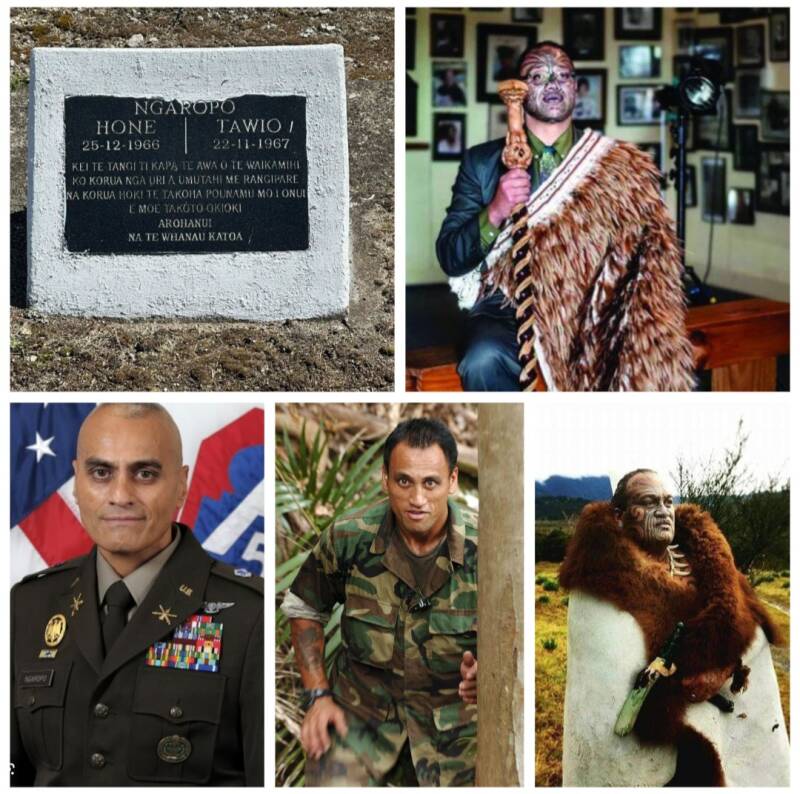
Hone Ngaropo is the tuākana of the whānau. He is the first-born son of Samuel Tāwio Ngaropo 2nd and Judith Amohaere Tangitū, and his position as tuākana remains according to the order of birth and whakapapa, whether living or deceased. He died prematurely, having been taken through mākutu because evil forces were trying to stop Hone from being the first-born and from carrying out what the surviving brothers were going to achieve in their lives. Hone and Sam 3rd were buried in Mangere Cemetery. When the family returned to Matatā to live 30 years ago, soil from there grave site was returned to Tīepataua Urupā close to Umutahi Marae. Hone holds Te Mauri (the life force) of the family and is the first-born son.
SAM TAWIO NGAROPO 3RD - Second eldest
Sam Ngaropo 3rd is one of the sons of Samuel Tāwio Ngaropo the 2nd and Judith Amohaere Tangitū. He is the second eldest brother of Samuel Tawio the 4th. He died prematurely, having been taken through mākutu. He was said to have ginger hair. Although Sam Ngaropo 3rd died prematurely, his position within the whakapapa remained, and his name continued through his surviving brother, Sam Tāwio 4th, and his son. The kōrero confirmed by Koro Tūtua, the spiritual Tohunga of Ngāti Awa, was that the two eldest brothers were taken through mākutu because of the important things they were meant to do in life, and that the surviving brothers would go on to complete. Sam Tāwio 3rd holds Te Ngākau (the heart essence of the family).
NICHOLAS HAMILTON NGAROPO — POUROTO, 3rd eldest
Nicholas Hamilton Ngaropo later changed his name to Pouroto. He is the third eldest son. Around 1987, Nicholas, our father and I travelled to Ōtara to see Aunty Bibi, our grandfather’s baby sister; this is Sam Tāwio number 1. During this hui, Aunty Bibi gave Nicholas her blessing to use the name Pouroto. At the same hui, Aunty Bibi also told us that Tangaroa was a tapu wānanga name that had been used by our great-grandfather, Te Ngaropo Tāwio Pouroto, while he was connected with Te Wānanga Ō Taitokerau during the 1850s, together with Ngākuru Pene Te Wao, Himiona Tākou Kāmira and 10 others from Te Hauraro Ō Hokianga. This was an important revelation about the names within our whakapapa and the deeper wānanga carried through the generations. Nicholas holds Te Pūkōrero (Orator, Statesman) element of the family and is still alive.
SAMUEL TĀWIO NGAROPO 4TH, 4th eldest
Samuel Tāwio Ngaropo the 4th is also the 4th son of Samuel Tāwio Ngaropo the 2nd and Judith Amohaere Tangitū. He and Sam Ngaropo 3rd were brothers. When Sam Ngaropo 3rd died prematurely, the name was carried forward through his surviving brother, Samuel Tāwio Ngaropo the 4th. Samuel Tāwio Ngaropo the 4th was therefore not the son of Samuel Tāwio Ngaropo the 3rd. They were brothers, both sons of Samuel Tāwio Ngaropo the 2nd. Sam Haami Ngaropo number 1 is our father’s father. Samuel Tāwio Ngaropo 4th left Aotearoa at the age of 16 and went to live in America, where he remained for the rest of his life and eventually became a citizen. He later continued the name into the next generation by giving the name to his own son. In this way, the name of Samuel Tāwio Ngaropo the 3rd, who had died prematurely, continued through his brother and then into the following generation. Sam Tāwio the 4th is Te Taha Hinengaro (mind) of the family.
CHRISTIAN MATIU NGAROPO, 5th son
Christian Matiu Ngaropo was the fifth-born son of Sam Tāwio Ngaropo 2nd and Judith Amohaere Tangitū. He was one of the four surviving brothers and, within the whānau kōrero shared by Koro Tūtua, his role was to carry Te Taha Tinana (physical attributes) of the family. Christian died at the age of 44 due to cancer. His passing marked the loss of the brother who carried that physical role within the family, leaving Nicholas and Tamehana to carry the remaining responsibilities of the surviving brothers. His place as the fifth-born son remains permanently within the whakapapa of Samuel Tāwio Ngaropo 2nd and Judith Amohaere Tangitū. He was his mother’s favorite. Following the premature deaths of the two tuākana, Hone Ngaropo and Sam Ngaropo 3rd, four brothers remained: Nicholas Hamilton Ngaropo, Samuel Tāwio Ngaropo 4th, Christian Matiu Ngaropo, and Tamehana Reone Ngaropo. Following the death of Christian at the age of 44, only three brothers remain today: Nicholas Hamilton Ngaropo living in Matatā, Samuel Tāwio Ngaropo 4th living in America, and Tamehana Reone Ngaropo living in Tahiti.
TAMEHANA REONE NGAROPO - AND ALL OTHER NAMES
Tamehana is the 6th son. Finally, the journey comes full circle with the name Tamehana Reone Ngaropo, the name given at birth by Samuel Tāwio Ngaropo 2nd and Judith Amohaere Tangitū. Thus, the names carried throughout the life of Tamehana Reone Ngaropo form a continuum. They connect birth and whakapapa, tūpuna and wānanga, whenua and relationships, education and responsibility, and the different stages through which his life unfolded. Most importantly, these names were his tūpuna names of spiritual protection. Within the whānau understanding, they were part of the protection surrounding the surviving brothers as they endured the bombardment of mākutu, jealousy and hatred directed towards them individually and their whānau from outside forces.
Example. Three Prophetesses from the Upper Waihou had placed a mākutu on Tamehana before he was born. We know the names. Every Christmas the whānau would return to Panguru and every time they returned Tamehana almost died in an accident. This happened for over 16 years. Another example, brought forward by Koro Tūtua - four men from Rotorua led by Irirangi Tiakiawa wanted Tamehana dead because of the mahi to be corrected at Marae Vaeāra‘i and Taputapuātea. They were not successful and paid the cost with their lives. The succession of names became a powerful thread through his life — each name carrying a connection, a purpose and a layer of spiritual protection, while allowing the whakapapa and the work of the generations before him to continue through him. Tamehana also lost his youngest son, Te Pouōterangi Ngaropo, to suicide. As shared by Koro Tūtua, this was also due to mākutu. Both sides of the family on Pou’s mum and dad’s side had broken down and made it easy for dark forces to infiltrate. These are the name transformations Tamehana went through. Why was Tamehana’s life so paradoxical? Because if you wipe out the spirit side of the family, the whole family is wiped out. So he was constantly pursued throughout his life. Tamehana is Te Taha Wairua (Spirit) of the family. So before people judge, or send mākutu. Ask your self if I had multiple people in generations before me, and during my time send mākutu could I survive it? Straight up, I don't think so. It takes a deeply strong person to survive all that. We did.
WHY TAMEHANA BECAME THE CARRIER OF TE TAHA WAIRUA
Tamehana Reone Ngaropo was the sixth son and carried Te Taha Wairua of the six-brother structure. As Hone and Sam Ngaropo 3rd were lost, Samuel Tāwio Ngaropo 4th left Aotearoa, and Christian later passed away, the responsibilities that had originally been distributed across the six brothers increasingly became concentrated among those who remained. Tamehana was not necessarily chosen from the beginning; circumstances progressively left him carrying the spiritual dimension of the family.
Within our whānau kōrero, this is why the forces of mākutu continued to focus upon him. If the carrier of Te Taha Wairua was removed, the spiritual infrastructure supporting the wider whānau could also be broken. His survival therefore became essential to the continuation of what the six brothers had originally carried together. There was also a greater purpose. Tamehana was to be involved in the reopening of Ngā Rangitūhāhā, which had remained closed for approximately 2,000 years. Within our spiritual understanding, the forces opposing that work were therefore also opposing his ability to complete it. This is why the three Prophetesses of the Upper Waihou Valley wanted him dead and also the team of Tohunga Wheiwheiā supporting Irirangi Tiakiawa. This sequence is important. The Kupe mantle came first. In April 2024, through his marriage to Heia Manuel Parau from Rurutu, Kupe the ancestor instructed Phrimin Te Orotai to bestow the Kupe name upon them as Kupe-Ariki Tāne and Kupe-Ariki Vaine. Phrimin bestowed Kupe Nuku IO-Ariki IX upon Tamehana, with the endorsement of 10 other Ariki, and special necklaces of protection were made for both Tamehana and Heia. They still hold them today. Then, approximately fifteen months later, in July 2025, Ngā Rangitūhāhā were reopened. The mantle was therefore placed first, and the work followed. Kupe Nuku IO-Ariki IX was not simply another name; it became part of the mantle and responsibility carried into the reopening of Ngā Rangitūhāhā. The six brothers → the progressive loss of the family structure → Tamehana as Te Taha Wairua → the Kupe mantle in April 2024 → the reopening of Ngā Rangitūhāhā in July 2025.
KUPE-ARIKI — THE CONNECTIVE THREAD OF THE CONTINUUM
Looking back across the journey of the six brothers, Kupe can now be seen as a connective thread running through the continuum, even though his presence was not fully visible or understood at the beginning. The signs were already there. In 1987, when Tamehana won the Rāwhiti Ihaka Manukōrero Trophy in Tauranga Moana, his whaikōrero included the words, “Ko tētahi o ngā tamariki a Kupe.” At the time, the deeper significance of those words was not yet understood. The connection became much more visible in 2024 through Tamehana’s marriage to Heia Manuel Parau of Rurutu, when Kupe the ancestor instructed Phrimin Te Orotai to bestow the Kupe name upon Tamehana and Heia as Kupe-Ariki Tāne and Kupe-Ariki Vaine. Tamehana received the name Kupe Nuku IO-Ariki IX, with the endorsement of ten other Ariki and special protection necklaces made for both Tamehana and Heia.
Looking back, these were not separate events. The Kupe connection was already woven through the journey; it simply became increasingly visible as the purpose unfolded. The reopening of Ngā Rangitūhāhā in July 2025 revealed another part of that continuum. From the perspective of the journey now understood, Kupe needed the Rangitūhāhā opened again so that the wider realignment could take place across approximately 800 generations. What had appeared to be the separate story of the six brothers can therefore be understood as part of a much larger continuum: from IO, through the whakapapa of Ngā Uri Ō Tāwio me Amohaere, through the six brothers, through Kupe, and into the reopening of Ngā Rangitūhāhā. The realignment was never only for one whānau. It extends outward to Aotearoa, Te Moana Nui ā Hīva, Te Ao Mārama (humanity) and Ngā Rangitūhāhā (multidimensional IO-verse).
TE WHATUKURA Ō TANGAROA — KUPE NUKU IO-ARIKI IX (2024)
The names Te Whatukura Ō Tangaroa and Kupe Nuku IO-Ariki IX were given in connection with the marriage to Heia Manuel Parau from Rurutu. Kupe the ancestor had visited Phrimin Te Orotai and instructed him to give Tamehana and Heia his name. Kupe-Ariki Tāne and Kupe-Ariki Vaine. Phrimin and his family also made two special necklaces to give to Tamehana and Heia for protection. Phrimin therefore bestowed the name Kupe Nuku IO-Ariki IX upon Tamehana at the marriage. Also upon Heia. The marriage took place on Marae Kupe-Ariki, of which Kupe-Ariki was buried underneath, and was supported by the presence of 10 Ariki from Tahiti, Maupiti, Bora Bora, Ra‘iatea and Taha‘a. The evilness and jealousy of people out there believe Tamehana gave these names and titles to himself. That’s incorrect.
TANGAROA NGAROPO TĀWIO POUROTO (2012)
The name Tangaroa Ngaropo Tāwio Pouroto was taken when Tamehana moved home to Waihou Nui a Rua Valley from Rotorua, Tauranga and Whakatāne in 2012 to live for 15 years, not raised in the Waihou Valley for all his life; he returned to represent his grandfather Tāwio Ngaropo 1st. The eldest son of Te Ngaropo Tāwio and Keeti Hoa. He lived on the maunga Pukepoto for 15 years where the Paramount Chief of Te Rarawa Tarutaru is buried. The locals were afraid to live there. Then, in 2024, he left for Tahiti to live with Heia Parau.
In 2016, Te Whatupungapunga Ō Nukutāwhiti was reopened by Tamehana. Tangaroa was a tapu wānanga name carried by his great-grandfather, Te Ngaropo Tāwio Pouroto. As Aunty Bibi explained during the Ōtara hui around 1987, the name Tangaroa had been used by their great-grandfather while connected with Te Wānanga Ō Taitokerau during the 1850s, together with Ngākuru Pene Te Wao, Himiona Tākou Kāmira and 10 others. Therefore, carrying the name Tangaroa was a reconnection with an existing name within the whakapapa and wānanga of the whānau. It was not simply a name adopted without ancestral precedent. It fitted the role perfectly of reopening Te Whatupungapunga Whare Wānanga Ō Nukutāwhiti in 2016. Everything has a purpose. In the Hokianga Wānanga, Tangaroa is a public name for IO.
TE NGAKOOTERANGI RĒNATA TE TĀWERA (2008)
The name Te Ngakooterangi Rēnata Te Tāwera was taken in 2008, when the education journey began in Matatā. It was inspired by his great-grandmother, Te Whareraupō Waiparapara Rēnata Te Ngakooterangi, who had the names Rēnata and Te Ngakooterangi tattooed on her arms. The education journey continued for eight years through Te Wānanga o Raukawa and Te Whare Wānanga o Awanuiārangi, progressing from Bachelor of Arts to PhD Candidate. His PhD is unpublished. Koro Tūtua was asked whether this journey was spiritually supported by the tūpuna of Te Tāwera Hapū Ō Ngāti Awa ki Te Awa Ō Te Atua. And did the tūpuna allow him to carry the name Te Ngakooterangi? Koro Tūtua said that all the tūpuna, including Te Whareraupō, laughed and said:
“It would only be this mokopuna to get away with it.”
It was a big joke to them, and they loved the idea I was wearing these names. This became another part of the deeper spiritual kōrero surrounding the names, the tūpuna and the journey that Tamehana was undertaking. This name later became significant through his work with Ngāti Tūwharetoa ki Taupō and the late Arikinui Tā Tumu Te Heuheu, where Tumu’s representative was sent to Tahiti in 2024 with Tamehana to maintain connections in the Pacific. Within the historical whakapapa, the ancestor Te Ngakooterangi was responsible for reinterring the tūpuna Tūwharetoa to Te Atuareretahi in Kawerau. This also helped while visiting Marae Vaeāra‘i because Ātoroiraʻi number 1 was a Tohunga Tūahuroa on this Marae.
TE WHAREKĀPONGA (1989)
The name Te Wharekāponga was given by Uncle Lewis Gardiner at Te Rotoiti in 1989, in the presence of Tamehana’s grandmother, Mihipeka Moanroa (Te Moa). This name became another part of the succession of names carried through his life to guide and protect against evil mākutu of jealous people. Originally, Uncle Lewis disagreed, and that was because Te Wharekāponga had no children. This is where the term Te Tokotoru Ō Te Wharekāponga arises. He adopted three children. Tamehana, Makarita and Taipapaki. Te Wharekāponga was the name of my great-grandfather, Tamehana Gardiner. The original Te Wharekāponga is a Tohunga Whakairo of Ngāti Pikiao, Te Rotoiti.
THE NEW INSIGHT — UNDERSTANDING THE JOURNEY IN RETROSPECT
What I can see now is something I could not see while I was living it. As the structure of the six brothers began to break apart, I did not understand the full meaning of what was happening. I did not know where all the names, experiences, losses, responsibilities and stages of my life were ultimately leading. I was simply moving through each one as it came. Yet somehow, through all of that, there was enough awareness and resilience to keep going. That is different from saying that I knew I had been chosen to complete a particular task. I did not have that understanding at the time. The significance only becomes visible when the whole journey is placed together and viewed retrospectively. I can now see that I was living individual pieces of something whose larger pattern would only become apparent much later.
That changes how I understand resilience. It was not that I understood everything and therefore knew how to overcome it. It was that I continued despite not understanding everything. The awareness came through the journey itself. The understanding came later. And this is not a story about one person standing apart from the other five brothers. The six brothers remain the foundation. What happened to each of them became part of the circumstances through which the continuation of the whānau unfolded. The deeper realization is that sometimes the meaning of a whakapapa cannot be understood from one generation, one person, or one event. It may only become visible when enough of the journey has been lived for the connections to reveal themselves. That is where I believe we are now. Not at the beginning of the story, but at a point where we can finally look back and recognize that what appeared to be separate experiences were part of a much longer continuum. We lived it before we understood it. And perhaps that is why it has taken until now to be able to name it.
OUTCOME — THE CONTINUATION OF THE SIX BROTHERS’ LEGACY
The outcome is not about Tamehana alone. It belongs to the six brothers, to Ngā Uri Ō Tāwio me Amohaere, and to the generations that have carried what came before them. One interesting point. When we were growing up we always wanted a sister. All of our first-borns are daughters. So so blessed.
In the Māori world, we have not yet reached a substantial level of IO Consciousness. There is still much kino, jealousy, envy and mākutu affecting our hapū, our marae, our communities and the minds of our people and our coming generations, to this day. The journey of the six brothers therefore sits within a much larger reality: how do we move from inherited breakage and unconscious patterns toward greater awareness, understanding and healing? Because what happened to the brothers was not their doing. It was said by Koro Tūtua that evil mākutu wanted them dead.
For me, one of the greatest outcomes is that, as the spiritual component of Ngā Uri Ō Tāwio me Amohaere, Tamehana continued to carry what had been placed upon the six brothers, no matter how difficult the responsibilities became. The entire infrastructure of the whānau on both sides, from the great-great-grandparents downward, had become broken in different ways. Yet by enduring that breakage, eventually naming it, thinking it, speaking it and beginning to understand it, something that can remain unresolved for generations could finally be brought into alignment for the tamariki, mokopuna and mokomoko. This is who this legacy belongs to. Sometimes a whānau can go for generations without being able to name what has happened to its own infrastructure. The fact that we can now look at it, speak about it and understand how the pieces connect is itself a healing. The survival of the six brothers, and of those who remain, is therefore a journey of resilience of the heart and indomitability of the soul. The outcome is not simply that individuals survived. It is that the whakapapa continued through everything that was placed upon it. Now that the breakage has been named, the whānau infrastructure has been reassembled — physically and spiritually. It’s protected. No mākutu can ever get to the coming generations because that burden was corrected by the six brothers. Because the six brothers endured and the mākutu failed, the burden was broken through their generation, allowing the generations that follow to come forward in greater alignment, protection and safety. What was once experienced as separate pieces can now be seen as part of a continuum, healed, and this whole realignment is for the tamariki and the 23 mokopuna, and the mokomoko yet to come.
They are:
Te Rina’s kids, one on the way. Nadiya Amohaere’s kids, Te Rangikeiwaho, Haamiora and Zion. Tāwio 5th’s daughter, Luana. Italy’s kids, Te Wairereahiahi, Tristan Nukutaimehameha, Tyran and Teilan, plus two more. Yasmeen’s kids, Nyel, Irie, Matiu. Rangipare’s son, Te Kuratāpirirangi.Hineteahorangi’s kids, Āio, Ariki and Ātearangi. Mātangireia’s kids, Hezekiah, Roha, Aporonia and Rose. Te Pouōterangi’s son, Tamaterereti. Kō ea.
Another great koha carried through the brothers was the reopening of Ngā Rangitūhāhā from Marae Vaeāra‘i and Marae Taputapuātea in 2025. That reopening was not for the brothers alone. It was for Te Ao Mārama (humanity) and Ngā Rangitūhāhā (The Multi-Dimensional IO-verse). Within our understanding, the preparation for such a responsibility reaches back approximately 800 generations through the whakapapa from IO to the six brothers. Another enormous responsibility was the reconnection of the eight Houses of Kupe-Ariki and the return of Kupe-Ariki to Aotearoa. This too became part of the wider continuation of what had been carried through the generations. The responsibilities of the six brothers therefore did not end with the immediate family. They became connected to responsibilities extending across Te Moana Nui ā Hīva, Aotearoa and beyond.
Even now, people in Te Moana Nui ā Hīva and Aotearoa continue, from our understanding, to use jealousy, backbiting and mākutu in attempts to break what has been reconnected. To this day, evil people make up false stories about the brothers, about their Arikitanga and about Kupe-Ariki. I hope one day Te Ao Māori overcomes their jealousy. This brings another enduring understanding into focus. Ultimately, IO, the Atua and the tūpuna protect what is meant to continue. That does not mean that there will never be opposition. It means that opposition does not necessarily determine the outcome. The whakapapa has continued. The names have continued. The responsibilities have continued. The work has continued; balance, healing and alignment endured in this case.
And perhaps this is why kōrero such as this needs to be shared. Until the story is spoken, many of the connections remain invisible. Once the kōrero is brought together, we can begin to understand why certain names were carried, why certain responsibilities emerged, why certain losses changed the structure of the whānau, and why the journey continued despite everything that happened. The outcome, therefore, is not simply what happened to the six brothers. It is what continued through them. It is the survival of whakapapa through breakage. It is the restoration of awareness where there had been fragmentation. It is the recognition of responsibilities that could not always be understood while they were being lived. And it is the continuation of a legacy that reaches beyond one generation and into the generations yet to come.
The six brothers endured.
Their whakapapa endured.
The mākutu failed.
And what they carried continues.
THE SIX BROTHERS — THE CONDUIT OF REALIGNMENT
When viewed across approximately 800 generations, the six brothers can be understood not only through what happened to them individually, but through what they collectively carried forward.
They became the conduit through which the accumulated breakage and fallout within the whakapapa could eventually be brought into alignment. What had been fragmented across generations could finally be recognized, understood and realigned, allowing the genealogical lines and whānau infrastructure to become whole again. The six brothers were the generation through which the realignment occurred — not for themselves alone, but from IO to Ngā Uri Ō Tāwio me Amohaere, and ultimately for the tamariki, the 23 mokopuna and the mokomoko yet to come. What was carried through the six brothers can now be carried forward by the generations that follow. The six brothers were the conduit. The realignment is the legacy. And the generations yet to come are who it was all for.
IN CLOSING
Hone Ngaropo and Sam Ngaropo 3rd, the two eldest sons of Sam Tāwio Ngaropo 2nd and Judith Amohaere Tangitū, were meant to become leaders of the family, but were lost prematurely through circumstances understood in our whānau kōrero as mākutu. Their deaths placed enormous strain on the family. When Sam Tāwio Ngaropo 2nd and Judith separated, the inner whānau structure weakened further. Samuel Tāwio Ngaropo 4th left Aotearoa for America at sixteen because he could no longer live with the circumstances surrounding the family and the deaths of his brothers. Christian Matiu Ngaropo, a fit man and SAS soldier, later died from cancer, which Koro Tūtua also understood through the kōrero of mākutu. With each loss, fewer brothers remained to carry what had been placed upon them, and the weight increasingly fell upon Nicholas and Tamehana.
My own household later weakened through my separation from Lisa Hinemanuhiri Bird, followed by the devastating loss of my son, Te Pouōterangi Ngaropo, to suicide. Koro Tūtua also shared his understanding of this loss through mākutu. Looking back, I honestly do not believe I would have survived everything without the spiritual support and protection I experienced through the names of tūpuna I carried and still carry today. Each name became a lifeline, reconnecting me to tūpuna, whakapapa, wānanga, purpose and protection, and helping me face the next burden or grief. These were not simply names or changes of identity; they became part of how I survived, continued the whakapapa and carried forward the responsibilities of those who came before me. The later Kupe names were different. They were filled with vision and legacy. They came through my connection with Kupe the ancestor, who asked me to carry his name and his legacy. I agreed to accept that responsibility. From that point, the names Te Whatukura Ō Tangaroa and Kupe Nuku IO-Ariki became part of a further unfolding of the whakapapa and the responsibility I had accepted to carry Kupe’s name and legacy forward. And perhaps, somewhere within Ngā Rangitūhāhā, the Multi-Dimensional IO-verse the 800 ancestors from IO to the brothers are no longer carrying the weight of what came before. They are standing together again — e waiata ana (singing), e kanikani ana (dancing) and celebrating the continuation of their Tātai Arorangi (whakapapa). That will never be broken again.
The brothers endured.
The whakapapa endured.
The generations continue.
The future is clear
And for that, we smile.
Every name had a purpose and a reason.